
Spittlegate Level, Grantham, Lincolnshire, NG31 7UH
Jockey Lane, Elkesley, Nottinghamshire, DN22 8BN
So you’ve bought yourself a caravan, or maybe you’ve changed your tow vehicle and now need a towbar to safely tow your caravan.
At Grantham’s, we specialise in fitting safe, reliable, and professionally installed caravan towbars for all major makes and models. Whether you’re getting ready for touring season, upgrading your towing vehicle, or fitting a towbar for the very first time, our expert team ensures your tow vehicle is equipped with the correct towbar and fully prepared to tow your caravan with complete confidence.
We believe in making things as convenient as possible, which is why we offer a mobile towbar fitting service. Whether you’re at work, at home, or prefer to drop your vehicle off with us while you explore the local area, we’re happy to accommodate.
Since 1st November 2014, all new towbars sold in the UK and Europe must legally be type-approved to UN Regulation 55 (UNECE R55). This ensures the towbar fits securely to the vehicle manufacturer’s designated mounting points and meets the highest safety standards. That’s exactly what we provide — fully compliant, professionally fitted towbars that give you complete confidence and convenience.

A fixed towball stays permanently on the vehicle, making it simple and cost-effective, but it does remain visible when not in use. You can get fixed flange & swan neck towbars.

A detachable towbar can be removed when not in use for a cleaner look, but it costs more and needs storing. You can get fixed flange & swan neck towbars.
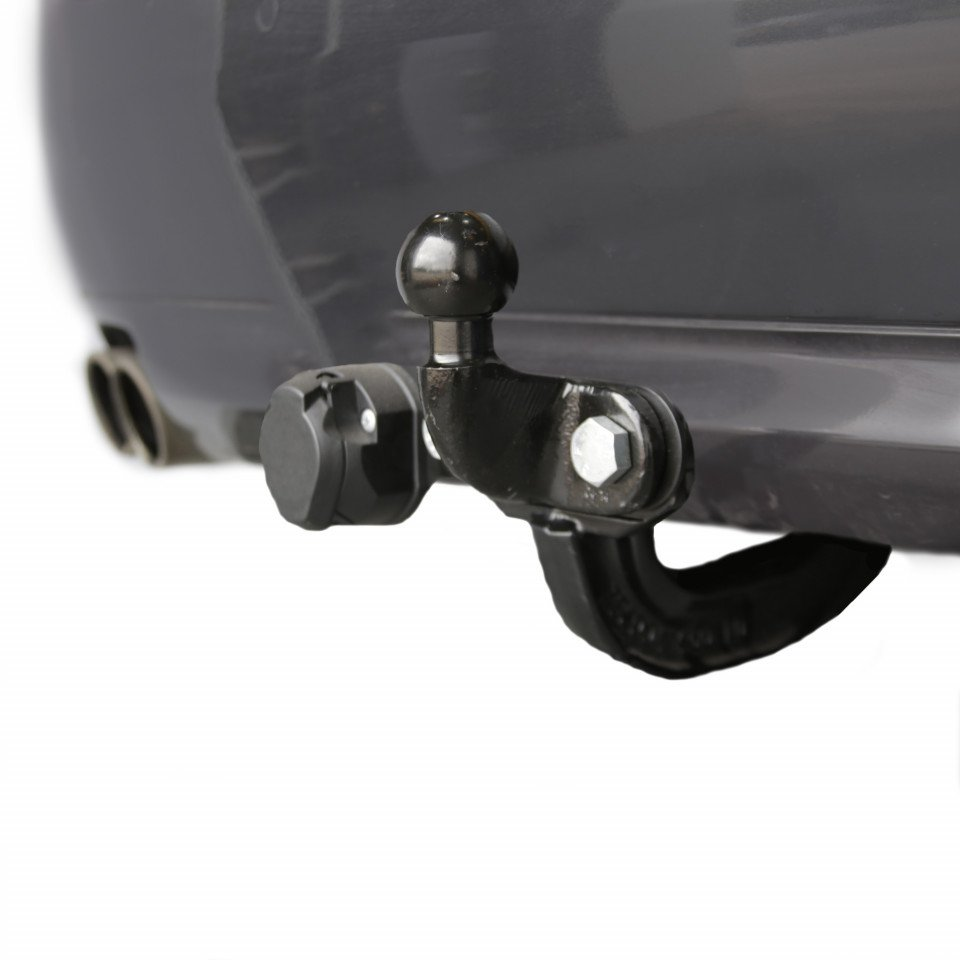
A flange ball towbar bolts the towball to a flat plate, making it affordable and great for adding accessories, but it’s bulkier and more likely to set off parking sensors. You can get them detachable & fixed.

A swan neck towbar features a sleek curved design that looks cleaner and usually works better with parking sensors, though it offers less flexibility for mounting certain accessories. You can get them detachable & fixed towbars.
A flange towbar uses a towball bolted to a flat metal plate.
Pros:
• Compatible with a wide range of accessories (bike racks, stabilisers)
• Usually the most cost-effective option
Cons:
• Bulkier appearance
• More likely to trigger reverse parking sensors
A swan neck towbar has a streamlined, curved design that integrates the towball and neck into one smooth piece.
Pros:
• Sleeker look and less visible on the vehicle
• Better performance with parking sensors
Cons:
• Limited compatibility with some accessories
Both flange and swan neck towbars are fully capable of towing caravans safely, so the best choice often comes down to your specific needs and preferences. If you want a cleaner, more discreet look, the swan neck design is usually the better option, and it also tends to work more reliably with parking sensors.
However, if you need maximum flexibility for accessories—such as stabilisers, bumper guards, or certain bike racks—the flange towbar offers far greater compatibility. Ultimately, your towing setup should reflect how you plan to use your caravan and your vehicle’s practical requirements.
At Grantham’s, every towbar we supply and fit fully meets the legal requirements set out in UN Regulation 55 (UNECE R55). Since 1st November 2014, all new towbars in the UK and Europe must be type-approved to this standard, ensuring they attach directly to the vehicle manufacturer’s designated mounting points, pass strict durability and safety testing, and maintain the correct towball height of 350mm to 420mm when the vehicle is fully laden. We take care of all of this for you, so you can tow with complete confidence knowing your setup is safe, legal and professionally installed.
UNECE R55 also specifies the correct horizontal clearance around the towball. There must be at least 65mm between the towball centre and the nearest vertical part of the vehicle to prevent contact with the caravan hitch during tight turns and manoeuvres. Grantham’s ensures your towbar is fitted to meet this requirement, giving you a compliant and reliable towing setup every time.
Towball Height & Caravan Stability – For safe caravan towing, your caravan should sit level or slightly nose-down when hitched. It should never sit nose-up. The correct towball height improves stability, weight distribution and handling, helping prevent snaking and instability at speed.
Caravan Noseweight Explained – Noseweight is the downward force your caravan places on the towball. Aim for around 7% of the caravan’s laden weight. Most cars support 50–80kg, while many SUVs and 4x4s allow up to 100kg. The correct noseweight is essential for safe, stable towing.
Breakaway Cable Requirements – UK law requires all caravans to have a correctly fitted breakaway cable that activates the caravan’s brakes if it detaches from the tow vehicle. Your towbar must include a strong, snatch-tested attachment point, and the cable must have enough slack for normal towing movement.
Avoid Second-Hand Towbars – Second-hand towbars can be unsafe due to hidden damage, missing parts or poor compatibility. Always use a new, professionally fitted towbar. If buying a used car with a towbar installed, have it inspected before towing.
Number Plate Visibility – Your number plate must remain fully visible at all times. If your towball or accessories obscure it when not towing, they must be removed. A detachable towbar is a simple, compliant solution where plate height causes issues.
Towbars for Older Vehicles – Older cars and motorhomes are not legally required to use type-approved towbars, but safety still matters. Choose a towbar tested to British Standard BS 150 1103:2007 or European Directive 94/20/EC for reliable and safe caravan towing.
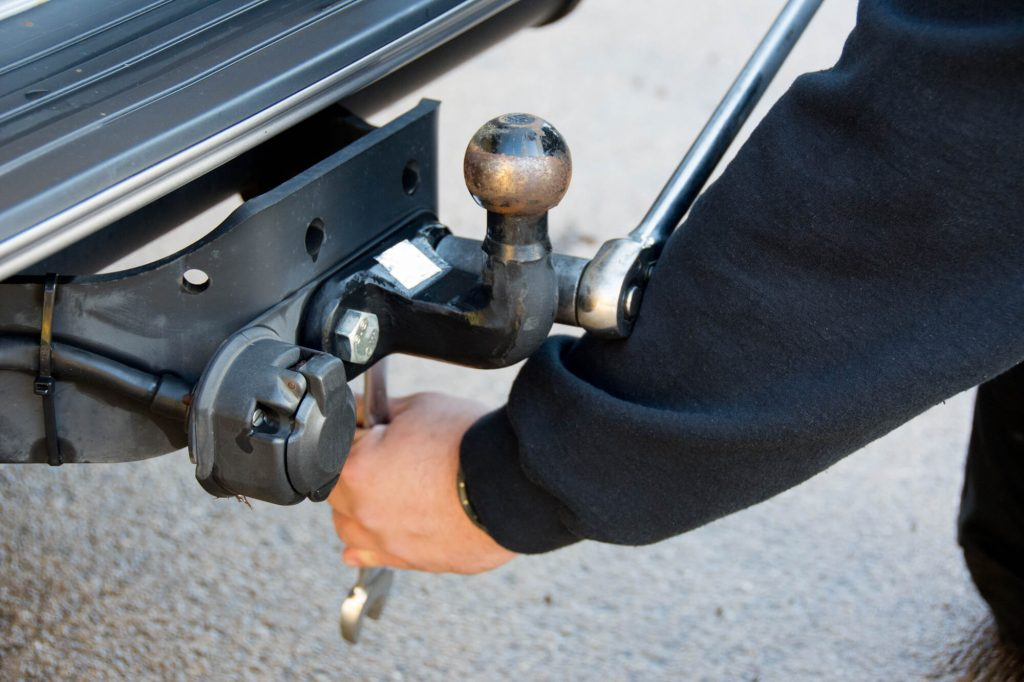
Yes. Any car registered after 1 August 1998 requires a UNECE R55 type-approved towbar. This ensures safe, legal and manufacturer-correct towing.
Absolutely. Grantham’s offers a full mobile towbar fitting service, bringing professional installation directly to you.
Most installations take 2–3 hours, depending on the vehicle and wiring type.
For caravans, 13-pin dedicated wiring is recommended. It ensures fault-free operation of road lights, charging systems, and caravan functions.
(We always use vehicle-specific wiring where possible.)
No. Used towbars are unsafe because their history, stress damage and missing components cannot be verified.
(Grantham’s will only fit new, approved equipment.)
Yes — we supply and fit premium, type-approved towbars for cars, SUVs, 4x4s, vans and motorhomes.